HEDEGAARD: "Sometimes music brings people closer than words ever could"
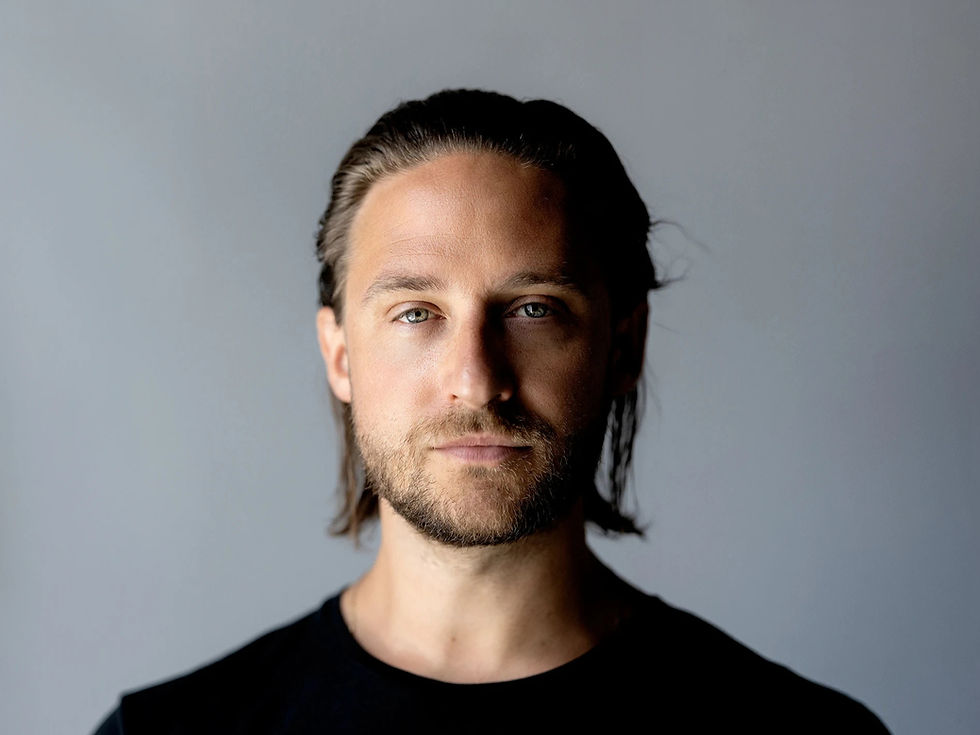
With more than a decade of releases, global hits and over 1.7 billion streams across digital platforms, HEDEGAARD has established himself as one of Scandinavia’s most successful electronic artists. Since gaining attention in 2011 with his unofficial remix of Dr. Dre’s "The Next Episode" the Danish producer and DJ has developed a distinctive sound blending electronic music, hip-hop and bass-heavy club production.
Over the years, HEDEGAARD has been behind major international hits including "Happy Home" with Lukas Graham and "Twerk It Like Miley" with Brandon Beal and Christopher, while also expanding his production work internationally with artists such as Korean supergroup NCT 127. At the same time, tracks like "JUMANJI" "SA-MY-D", "All Designer" and "JEEP" have established his signature rap-club fusion and strengthened his reputation as the "King of Car Music"
His international growth has been particularly strong in Asia, where a long series of releases has charted in China and helped establish him as a prominent Western electronic artist in the market. This connection also inspired "Western China’s Melody", an ambitious album and documentary project created while travelling across the country and featuring collaborations with artists including Karen Harding, Waka Flocka Flame and Moguai.
Alongside his own releases, HEDEGAARD launched the OneHundred label in partnership with Spinnin’ Records, creating a platform dedicated to the evolving Car Music sound. With an expanding international audience, major collaborations and a growing presence across Europe, Asia and the US, HEDEGAARD continues to bring his distinctive combination of hip-hop attitude and electronic club energy to a global stage.
KINΔ was created while you were travelling across ten provinces in Western China. Was there a particular experience that completely changed the direction of the album or the way you approached the project?
The whole journey was a huge experience for me, and I’m extremely grateful that I got the opportunity to travel through so many different parts of Western China and meet people and experience musical traditions that I knew very little about beforehand.
When I left Denmark, I honestly had no idea what to expect. I also didn’t know what the album was going to sound like. That was actually one of the biggest challenges, because the traditional music and my electronic production needed to feel connected. I didn’t want to simply place Chinese recordings on top of a HEDEGAARD production. The two worlds had to make sense together.
One moment I remember especially clearly was meeting the Dong Village Children’s Choir, also known as the Cloud-kissed Dong Village Choir, in Congjiang, Guizhou. We spent a beautiful morning together, having a picnic outside in nature, and then the children sang for me. It was one of those moments where everything just stopped for a second. Their voices in that setting were incredibly powerful.
As soon as I heard them, I could immediately imagine the electronic world around it. I heard an Afro House feeling straight away, and that eventually became "Dancing With My Destiny".
That happened several times during the journey. Sometimes I heard a musician or a voice and instantly knew what direction the track should take. Other recordings were much harder. I would come back to Denmark and spend a long time experimenting with different tempos, chords and genres, sometimes together with the international artists involved in the album, before finally finding the right approach.
That became a big part of the philosophy behind KINΔ. Instead of deciding what the album should sound like beforehand, I tried to let every meeting and every recording tell me where the music wanted to go.
Alongside the album, you're releasing the documentary Western China's Melody, which reveals the creative process behind each track. Why was it important for you to show not only the finished music, but also the challenges, discoveries and conversations that shaped it?
Because without seeing the journey, you’re only getting part of the story. Every track on KINΔ started with a real meeting, a place, a musician or an experience. The field recordings weren’t taken from a library or sent to me over the internet. I was actually there meeting the people behind the music, listening to them perform and learning about where those sounds came from. That context completely changes the way you hear the finished record.
Western China’s Melody also shows that I didn’t arrive in China with all the answers. A big part of the project was discovery. Sometimes we immediately found a musical connection, and sometimes I had no idea how I was eventually going to transform what I had recorded into electronic music.
I think it was important to show those conversations and moments of uncertainty because KINΔ is not only about ten finished tracks. It’s about what happens when people from very different musical and cultural backgrounds meet each other with curiosity.
One of the biggest things I learned during the journey was that music can become a common language incredibly quickly. Even when we came from completely different places or didn’t speak the same language, we could still connect through music. The documentary allows people to actually see that happening rather than only hearing the result afterwards.
The album blends your signature "Car Music" sound with field recordings and traditional Chinese music. How did you make sure you were celebrating those musical traditions rather than simply borrowing from them?
My starting point was always the original recording. Whenever I came home with a traditional instrument, a voice or a melody, the first question was: how can I make this shine as much as possible? I never wanted it to become just a small sample hidden somewhere inside a HEDEGAARD track. The whole vision behind KINΔ was to create a meeting between two musical worlds. That means both sides have to be allowed to influence the result.
Because of that, several tracks ended up moving quite far away from what people would normally describe as Car Music. Across the album there are elements of Afro House, Melodic House, UK Garage, ambient and Minimal House. That wasn’t something I planned in advance. It happened because different recordings needed different musical environments.
For me, that was the most respectful approach. Instead of asking, “How can I make this traditional music fit into my sound?”, I tried to ask, “What kind of electronic production allows this recording to be heard in the best possible way?” I wanted the traditional music to remain part of the identity of the track, not just decoration around it.
Fans know you as the "King of Car Music", but KINΔ feels like a much more immersive and culturally driven project. Do you see this as the beginning of a new chapter in your career?
KINΔ is definitely much more than a Car Music album, but I also see it as a very specific body of work.
It came from one journey through China, the people I met there and everything I experienced along the way. In that sense, the album is almost the final chapter of the journey itself. I don’t think it means that every HEDEGAARD release from now on will suddenly sound like KINΔ. But I definitely came home as a different producer from the one who left Denmark.
The project taught me to approach music differently. Sometimes you don’t have to begin with a genre, a drop or a production idea. You can begin with a person, a place, an instrument or even an atmosphere and let that decide where the track goes. So I’m sure elements of what I learned will stay with me. Maybe the biggest change is simply that my idea of what a HEDEGAARD track can be has become much wider.
KINΔ features artists like Arash, MOGUAI and Waka Flocka Flame, each bringing a very different energy. When you're building a collaborative album, what makes you think, "This is the perfect artist for this track"?
Usually the track came first. I would build a demo around the recordings from China and try to find the identity of the production. Once that world started becoming clear, my team and I would listen and discuss who we could actually hear on the record.
The important thing was that a feature should never just be there because it was a big name. The artist had to bring something to the song that made the whole record stronger. Sometimes we needed a certain voice, sometimes a particular type of energy, and sometimes we wanted someone whose musical background created an interesting contrast with what was already there. Then, when we could really imagine that person inside the track, we reached out.
That’s why the album can include people like Arash, MOGUAI and Waka Flocka Flame even though they come from completely different musical worlds. Each collaboration has its own logic within the track.
In a way, that also reflects the entire idea behind KINΔ. It’s about putting musical worlds next to each other that normally wouldn’t meet and seeing what can happen when they do.
Over the past few years you've built an incredibly strong connection with audiences in China, from chart success to viral moments on Douyin. Why do you think your music resonates so deeply with Chinese listeners?
I honestly don’t know exactly, and I’m still quite surprised by it. When you’re sitting alone in a studio in Denmark making a track, it’s very difficult to imagine that people thousands of kilometers away might eventually develop a connection to it.
Maybe part of it is that a lot of my music is very direct and physical. The bass, the groove and the energy communicate something without necessarily needing a lot of explanation. That can travel across languages quite naturally. But I would be guessing if I tried to give you one exact reason.
Mostly I feel extremely grateful and honored that people in China have connected with my music in that way.
What changed for me through KINΔ and Western China’s Melody is that this connection became much more human. It’s one thing to see streaming numbers, charts or videos online. It’s completely different to travel through the country, meet people face to face and realize that your music has actually become part of someone else’s life. That has meant a lot to me.

Dance music trends evolve incredibly fast, yet you've maintained a very recognizable identity throughout your career. How do you balance staying true to your sound while continuing to evolve as a producer?
I think there’s an important difference between having your own identity and repeating yourself.
There are certain things I naturally gravitate towards when I produce. Certain rhythms, bass sounds, grooves and a certain kind of energy. After doing this for many years, those things have almost become part of my musical DNA.
But I also don’t want to know exactly what I’m going to make every time I enter the studio. That would become boring very quickly. I listen to a lot of different music and I love discovering new techniques, genres and ways of producing. The challenge is taking those influences and filtering them through your own taste rather than simply following whatever is popular at that moment. For me, evolution works best when it happens naturally.
KINΔ is probably a very good example. I moved into genres and musical traditions that were quite far away from my usual world, but I still wanted people to hear the finished tracks and recognize something of me inside them. I think that balance is what keeps producing exciting.
You've often highlighted that you're a 100% self-made artist in an industry where ghost production is common. Why has it always been so important for you to remain fully involved in every aspect of your music?
I think you have to ask yourself why you became a musician in the first place. For almost everyone, I imagine it begins with a genuine passion for music. But when music becomes your career, suddenly there’s also touring, streaming numbers, social media, deadlines and an entire business around it. For some people, maybe the business eventually becomes bigger than the original passion.
For me, it has always been extremely important to hold on to the joy of actually making music. I feel incredibly fortunate that something I started doing simply because I loved it eventually became my profession. So it would feel very strange to me to then hand the most important part of that process over to somebody else.
Of course, I collaborate all the time. I work with singers, songwriters, musicians and other producers, and I think collaboration can make music much better. But I always need to be creatively involved. I want to sit in front of the speakers, make decisions, experiment, change things and actually build the record.
That process is still one of my favorite parts of what I do. If I gave that away, I think I would also be giving away a big part of why I became an artist in the first place.
After generating more than 1.7 billion streams and achieving international success, what motivates you the most today: chasing bigger numbers or creating ambitious projects like KINΔ that are rooted in cultural exchange and real-life experiences?
My job almost feels like two completely different jobs. There’s the producer in the studio, often alone or together with a singer, songwriter or another producer. Then there’s the DJ travelling and standing on stage in front of thousands of people. They motivate me in very different ways, but they also depend on each other.
When you’re in the studio, the music is still private. It belongs to you and the people you’re making it with. Nobody else has an opinion yet. I really love that space. You can experiment, make mistakes, spend hours changing tiny details and build something that didn’t exist when you woke up that morning.
And then sometimes you reach that moment where everything suddenly feels right. That feeling is still incredibly addictive to me. Performing is almost the opposite experience.
Suddenly that thing you made privately in a studio has travelled out into the world and become part of other people’s lives. You can fly to another country and see people you’ve never met singing along to a record you remember sitting at home making. That can honestly feel quite unreal. Of course numbers matter. They tell you whether the music is reaching people and they allow you to continue doing bigger things. But a number on a screen has never been as powerful to me as seeing an actual person react to the music.
KINΔ introduced another type of motivation. With this project, the real-life experiences came first and the music grew out of them. That was completely new for me. So today I think what motivates me most is still discovery. It can be discovering a sound in the studio, seeing a crowd react to something for the first time or travelling somewhere and realizing that music can connect people who, on paper, have almost nothing in common.
Looking back ten years from now, what do you hope people will remember most about KINΔ and Western China's Melody: the music itself, the experiences behind it, or the cultural dialogue the project set out to create?
Hopefully people won’t have to choose between those things, because to me they’re all connected.
First of all, I’m a musician, so I obviously hope the music itself lasts. I would love for someone to discover KINΔ ten years from now without knowing anything about the project and simply connect with one of the songs. But I also hope the music makes them curious about the story behind it.
Maybe they hear a voice or an instrument they’ve never heard before and then discover the musician, the place or the tradition behind that recording through Western China’s Melody. For me, the biggest realization of the entire journey was how much people can have in common even when they come from completely different cultures.
That’s also part of why I called the album KINΔ. Visually, it resembles "Kina", the Danish word for China. “Kin” means family or your people, and for me that represents the feeling that we are often much more alike than we think. The delta symbol represents change, because the journey genuinely changed my perspective both personally and creatively.
Throughout the trip, music became a common language. Sometimes we didn’t speak the same language at all, but once people started playing or singing, that distance became much smaller.
If people remember KINΔ as good music, I’ll be proud. But if they also remember it as a project that made different cultures feel just a little closer to each other, then I think it achieved something even more meaningful.

Follow HEDEGAARD
Instagram / Facebook / Soundcloud / YouTube / Spotify