Meloko: "My creativity needs freedom, and embracing diversity in my music is what keeps me inspired"
- Jan 30
- 6 min read

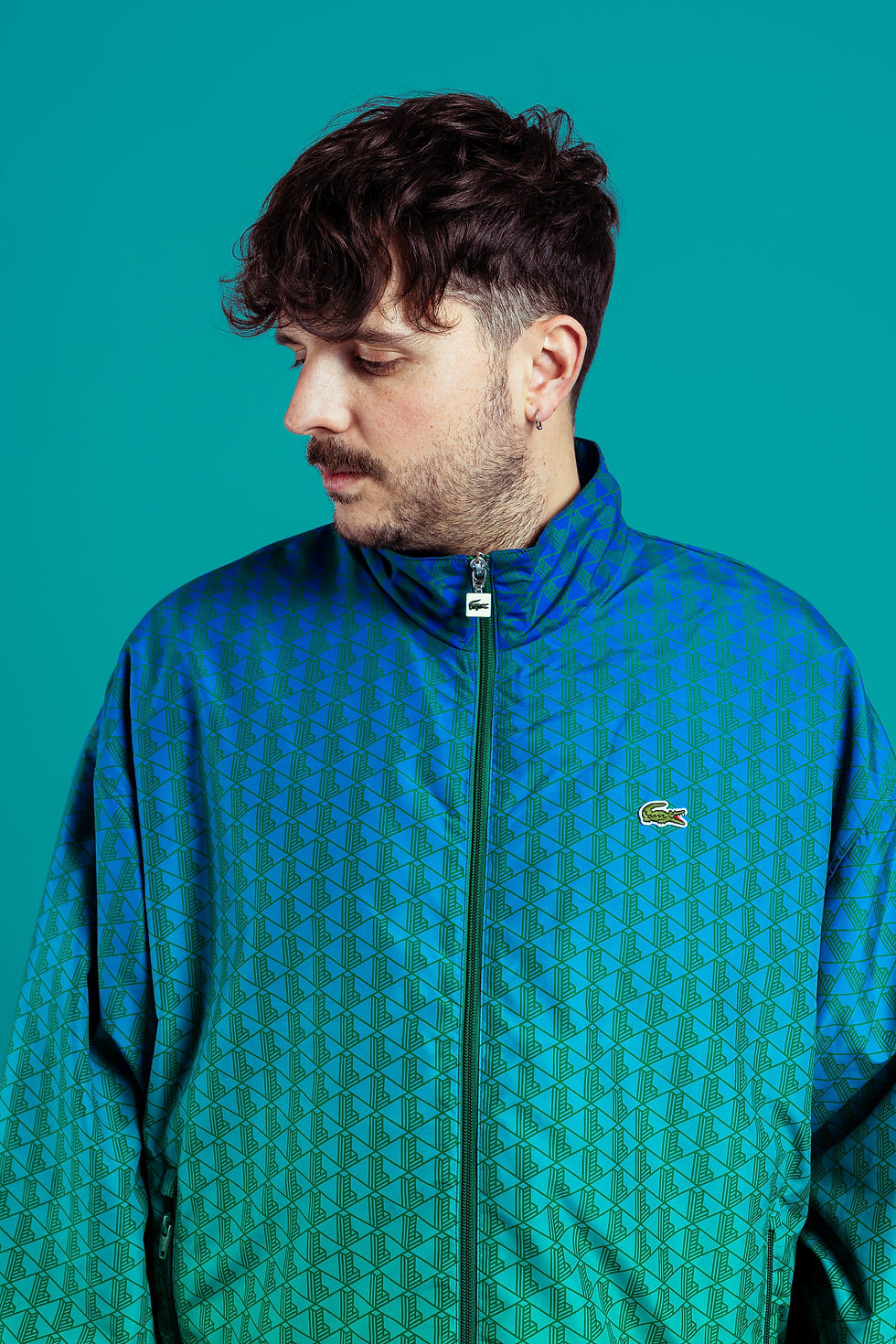
Meloko is a DJ and producer from Marseille, emerging as a key figure in the melodic house, afro house, and deep house scenes. His music blends Mediterranean atmospheres, african rhythms, and arabic influences to create a unique and captivating sound. As co-founder of the AZZUR label and collective, Meloko achieved significant success in 2024 with releases supported by prominent artists such as Keinemusik. He is sometimes mistaken for Moloko, the renowned Anglo-Irish electronic duo from the ’90s and 2000s, famous for hits like "Sing It Back".
Can you tell us how your love for electronic music started and what were your first influences?
I grew up immersed in the sounds of Laurent Garnier, Daft Punk, Paul Kalkbrenner, and other electronic music pioneers. Early on, I had the opportunity to work with renowned event promoter Pascal Peck.
Through him, / was able to meet and provide artist care for legendary figures such as Derrick May, Jeff Mills, Maceo Plex, Marcel Dettmann, Ben Klock, Robert Hood, Nina Kraviz, and many more. These experiences have profoundly shaped and expanded my musical culture, no doubt... Later on, I became deeply influenced by the Berlin scene, particularly the early works of the Keinemusik collective. Their sound continues to play a significant role in shaping the music I produce today.
The Mediterranean and the city of Marseille seem to play an important role in your music. How does this environment inspire your sound?
Marseille is a multicultural, sun-drenched city on the Mediterranean coast, and it has undeniably shaped my music. I've always been drawn to deep house and warm, sun-soaked melodies, and our sound is heavily inspired by African, Arabic, and Mediterranean in-fluences. A few years back, the city also played a major role in my musical education thanks to some remarkable promoters who brought the true legends of electronic music to Marseille. Iconic clubs like La Dame Noir, Spartacus Club, Baby Club, and festivals such as Nuit Rouge, Dragon Ball, Weart and much more introduced me to this rich musical world and helped forge my artistic identity. Unfortunately, the local scene isn't as vibrant as it once was, but its legacy remains a fundamental part of who I am and the music I create.
How did the AZZUR Music project come about, and what is the philosophy behind your label?
AZZUR (As You Are) is, above all, a story of friendship. The label was born from a 15-year bond between Konvex and me and today it thrives thanks to a close-knit circle of friends, including Selim Sivade, Baron, Nsha, Yoni, Garla, Utli, and many others. At some point, we felt the urge to create our own musical space, somewhere we could release whatever we wanted, without limitations, and fully express our artistic vision. That's how AZZUR came to life. Since then, the label has become a platform where we can showcase the music we believe in and share the sounds that inspire us. We've had the chance to help many producers bring their work to the world, and that is something I'm genuinely proud of. Looking ahead to 2026, our focus will be on taking AZZUR even further, and I'm truly excited about what's to come.
Your style spans melodic house, afro house, and disco-funk. How do you manage to blend these different sounds in your work?
It's a daily challenge, to be honest. Sometimes / worry that I'm producing too many different genres, but at the end of the day, that's simply who I am. I love electronic music in all its forms, and since I don't limit myself to a single style when I play, it feels natural that my productions explore different directions as well. It's part of my identity, my richness, and my heri-tage, and I'm proud of that. I'm always impressed by artists who can dedicate themselves to one specific sound. I sometimes wish I could be that kind of pro-ducer, but in reality, I would get bored and frustrated. My creativity needs freedom, and embracing diversity in my music is what keeps me inspired.
You've collaborated with many artists and launched projects like Palavas. Which collaboration has been the most meaningful to you so far?
Honestly, working with my friend Konvex is one of the things I enjoy most. We've been producing music together for years, and it has always felt natural and incredibly rewarding. We're both passionate about music, and our creative process often turns into long, exciting conversations that I truly cherish. I couldn't imagine a better partner to share this journey with; he's the perfect collaborator. I don't need somebody else.
In your artistic journey, what has been your most memorable moment or a turning point?
Playing in Berlin is always something special. That city literally changed our lives. Between 2013 and 2016, I worked as Label Manager and A&R for OFF Recordings, which at the time was one of the most successful electronic music labels in the world. Those years took me frequently to Berlin, to work, to play, and to immerse myself in its energy. I'll never forget a 10-hour set Konvex and I played at Sisyphos, watching the sunrise as the dance floor kept moving. Moments like that were transformative. It was then that l knew I wanted to dedicate my life to electronic music. I still get goosebumps just thinking about it. I'm deeply grateful to André Crom for opening that door and making it all possible.
What tools or software do you prefer to use for music production and why?
I'm a simple guy when it comes to producing music. All 1 really need is my computer running Logic and a keyboard. I love sam-pling, experimenting on the keys, and moving quickly from one idea to the next—/ thrive on momentum. My best tracks are usually the ones that come together in just a few hours. The real challenge in the studio is capturing that magic moment of inspiration and translating it into something tangible before it slips away. As for tools, I keep things focused. My essential plugins are Soundtoys, Microtonic, the Arturia Collection, Diva, and Thorn. About 98% of my tracks are made using just these-nothing fancy, just what works and what inspires me.
You're also very committed to environmental protection, especially of the Mediterranean Sea.
How do you balance this commitment with your music career?
Sadly, I haven't been able to do much lately because my time is really limited. I wish I could do more, and / will-soon, for sure.
Marseille is an amazing city, but unfortunately, some people are ruining parts of it through careless behavior. That's why I support initiatives like Clean My Calanque, who are fighting to protect and preserve our environment.

How would you describe the evolution of the French electronic scene in recent years, and where do you see its future?
In France, Paris concentrates nearly 90% of the nation's nightlife, and that scene continues to flourish. However, once you step outside the capital, the reality becomes much more complex. A mix of heavy regulations, economic pressures, and security concerns has made it increasingly difficult for venues to operate. As a result, many of the spaces that once championed true musical culture have disappeared, replaced by shallow entertainment with little artistic value. Too often, promoters undervalue artists-paying them poorly, undermining their work, and treating music as an afterthought. In such conditions, it's impossible to cultivate a strong new generation. When I was younger, Marseille was a completely different world.
The city hosted legendary lineups and unforgettable venues-Spartacus, Nuit Rouge, Air Libres, Seconde Nature, Dragon Ball, Weart—places that shaped my musical education and helped form the artist I am today. Back then, electronic music wasn't a commodity; it was a journey, an experience. There was no space for what / call "electronic entertainers," people who reduce the genre to a playlist of easy hits.
Today, that approach is everywhereDJs playing track after track without a story, without progression, without soul. It's musically empty, and if we're not careful, it risks suffocating the future of the scene. We need genuine music enthusiasts running venues—not individuals driven by ego or the pursuit of visibility. And yet, I remain optimistic. France is currently experiencing an exciting new wave of produ-cers. In my "scene", artists such as Notre Dame, Alex Wann, Baron, Nico de Andrea, Betical, Agoria and many others are travelling the world and shaping what I like to call French Touch 3.0. Their talent and vision prove that creativity survives, even when the local ecosystem feels unstable. Still, it's somewhat ironic-and a touch bittersweet-that I perform more abroad than in my own country. France is where my sound was born, yet it's the world that seems to celebrate it most.
What advice would you give to a young producer or DJ trying to break into the electronic music scene today?
I would say: trust yourself, be patient, work hard, and don't overthink. I've lost a lot of time doubting myself or letting negative thoughts push me off track. A music career is like steering a massive ocean liner; changes take time, and results don't appear overnight. At one point, I tried to chase trends and emulate whatever was hitting at the moment, thinking it would be a shortcut. In the end, I wasted more time doing that than I ever gained. Staying true to your own direction is the only real way forward. Oh, also, work with people you like and admire. Don't waste your energy on people who aren't aligned with your vibe. You can't change others, and trying to do so will only drain you. Focus on those who share your vision and move forward with them.

Follow Meloko