USATOV: "Contrast between solitude and shared energy continues to shape my style"
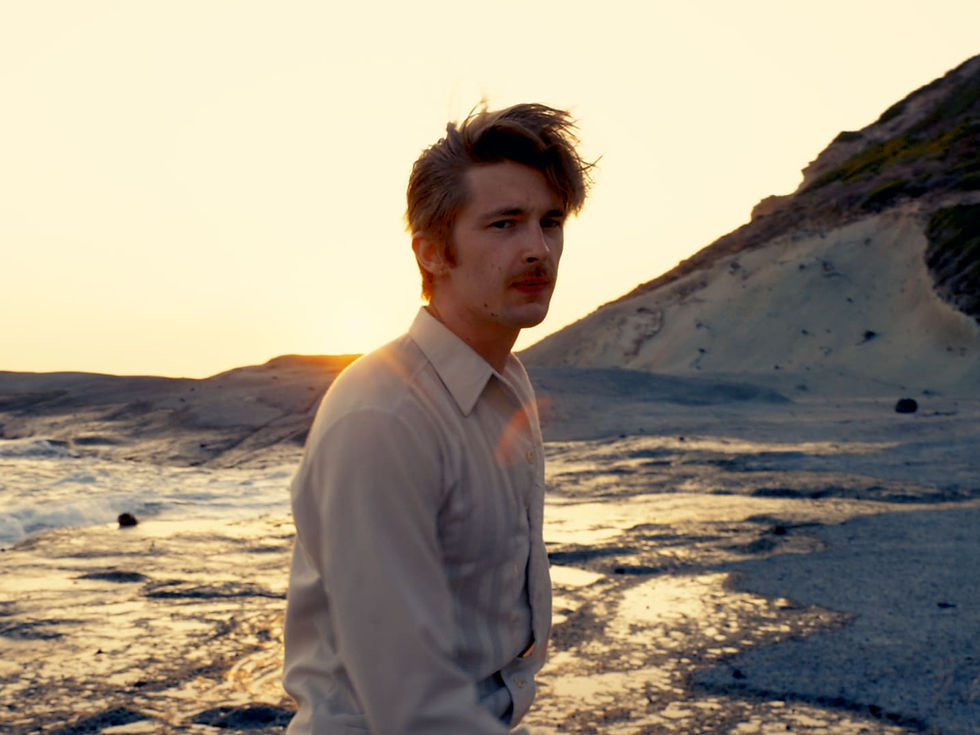
Usatov is a german-russian DJ, producer, and founder of DIVE DEEP, he creates emotionally immersive soundscapes - blending melancholic melodies, tech-infused grooves with cinematic textures, organic instruments and his own vocals or those from artist he admires. With standout remixes of artists like Duke Dumont, MC Menor JP, and more, his edits have gained traction across genres. Usatovs original tracks were supported by names like Rose Ringed and Patrick Krause. His signature style fuses saturated pianos, emotional strings and gritty basslines into immersive, emotionally charged sets. His recently released self-directed music video further showcases his ability to translate deep feeling into audiovisual storytelling - extending his artistic vision beyond the club floor. Through Dive Deep, Usatov is shaping a movement where sound, emotion, and experience converge.
What inspired you to found Dive Deep, and what musical philosophy do you want to convey through this project?
Dive Deep was born from a mix of isolation and a deep creative hunger during the Covid era. I felt a strong urge to build something on my own terms - a platform where music, visuals, and storytelling could align without compromise. After moving to Amsterdam, I started experimenting with small events. Eventually, there was a breakthrough: a night at the A'DAM Tower that changed everything. Since then, Dive Deep has evolved into a space for emotionally rich music, a strong visual identity, and a growing community — always rooted in depth over hype.
Today, Dive Deep stands for contrast, con-nection, and emotional honesty. We host two event concepts: Melodic Nights — cinematic and introspective journeys through deep, melodic sounds — and House Nights - vibrant, groove-driven celebrations of rhythm and presence. Both share the same spirit: immersive experiences that go beneath the surface.
How has your artistic approach evolved over time, and how does your personal experience reflect in the music you create?
My music has always been shaped by introspection - especially during the past year, which was a time of deep personal transformation. I took a step back, looked inward, and let go of perfectionism. Out of that stillness, a lot of new music emerged - often centered around piano solos, atmospheric strings, and emotional vocals that surface when I manage to turn off my mind and just feel.
Collaboration also brings something uniquely powerful. Some of my most interesting tracks were born from those moments — like working with a friend from Brazil, whose raw guitar riffs gave a new texture to my sound, or layering my production beneath Hungarian folk vocals from a singer / met. That contrast - between solitude and shared energy - continues to shape my style.

What criteria did you use to select the tracks and create the pertect atmosphere for "Melodic Nights - Volume III?
For me, curation is storytelling. With Melodic Nights - Volume IlI, I wanted to create a journey that moves from introspective warmth into peak emotional intensity —a night that slowly unfolds rather than hitting all at once. It's about contrast: delica-te, melodic textures meeting deeper, more driving grooves as the energy evolves. That's also how the lineup came together. Beswerda, EdOne, Ju, and I each represent a different chapter of that story.
Beyond technical skill, I chose artists who understand emotional pacing — how to build tension, when to hold back, and when to let the room fully open up. Each set has its own identity, but together they form one coherent narrative. The goal is for the night to feel less like a series of separate performances and more like a continuous expe rience — where the music guides people inward first, and then outward again, fully connected on the dancefloor. Even though the journey goes deep emotionally, the goal is never heaviness — it's release. By the time the room opens up, it's about shared energy, movement, and that moment where everyone forgets themselves and just dances.
How do you see the power of music in connecting people and fostering emotional healing?
Music cuts through everything - ego, lan-guage, background. It allows people to feel seen and understood without needing to explain themselves. In the club, when the right track hits, it's like we all breathe in sync for a moment. That collective release, that surrender to something bigger — it's a kind of healing, even if it's temporary. That healing doesn't feel serious in the room-It ofte shows up as smiles, hugs, laughter, and people losing track of time together on the dancefloor. That's the magic I try to cultivate with Dive Deep.
How do you think an artist can build a solid and lasting career without getting swept away by passing trends?
It starts with clarity about who you are. If you know what you stand for, it's easier to say no to distractions. Trends are temp-ting, but they pass. Longevity comes from consistency and evolution, not constant reinvention for attention. I try to stay rooted in emotion and craft - if the music feels honest, it resonates longer. That's what builds connection and trust with your audience.
How do you approach artist health, especially hearing protection, and what advice would you give to those working in electronic music?
Last year, I developed tinnitus — a constant ringing in my ears that doesn't go away. I panicked and went straight to the doctor, hoping there was a fix, but / was told it's untreatable. That moment was a real wake-up call. You don't realize how fragile your hearing is —and how essential
it is to both your craft and your everyday well-being — until something changes permanently. Since then, hearing protection has become non-negotiable for me.
That's also why we're collaborating with Earbeanz: together, we want to actively promote awareness around hearing health within club culture. custom earplugs are a small investment compared to the long-term impact of hearing damage. My advice to anyone working in electronic music — artists, DJs, or ravers - is simple: take your hearing seriously early on. Protect it, so you can keep creating, perfor-ming, and enjoying music for years to come.

Your recent self-directed music video tells a very intense story. What was it like to translate the emotions you usually convey through sound into visuals?
"Truth" was my first venture into visual storytelling, It starts with me discovering a glowing orb - suddenly aliens appear, a VHS screen shows Eredinho playing guitar, and reality begins to shift through different visual styles: cinematic, VHS, cartoon, and finally back to a world that's subtly but permanently altered. The orb and aliens are metaphors for invisible forces - like emotions or realizations - that, although you can't always explain them, leave your world undeniably changed. Just like music, they touch something beyond logic and reshape how you see things.
Your music combines electronic elements with organic instruments and vocals
— what's your creative process for balancing these elements?
It's all about tension and resolution. I often start with a piano motif or a vocal idea — something emotional and raw. Then I build the electronic framework around it to either support or contrast that feeling. I love when a track feels both human and futuristic - like you're floating but grounded at the same time. That balance is what makes it feel alive. For a long time, / wanted to let my own voice become part of that process — not in a performative way, but as a way of slowly bringing more of my authentic self into the music. The vocals don't need to explain everything - they're there to express emotion in a raw, honest way. A lot of that material has been taking shape quietly, and 2026 will be the moment when many of those tracks finally see the light of day.
You've remixed very diverse artists. How do you choose collaborations or tracks to reinterpret, and how do you maintain your distinctive style in these remixes?
It's often a mix of spontaneous inspiration and the urge to experiment. Sometimes I stumble upon a track and immediately hear how I'd reshape it — other times, I'm driven by a deeper emotional connection to the original. I always aim to retain the core feeling while infusing it with my own tex-tures, harmonies, and rhythmic sensibility. That's how I preserve my identity across very different sonic worlds.
Where do you see Dive Deep and your music in the coming years? What new artistic directions or immersive experiences would you like to explore?
Dive Deep is evolving into more than a label or event — it's becoming a philosophy. I want to continue building a space where emotional depth, honesty, and aesthetic intention come together - through music, events, and audiovisual projects. I'm interested in blending music with storytelling and immersive design, creating full experiences where people don't just dance — they feel, remember, and tran-sform. At the end of the day, Dive Deep is still a place to celebrate — to dance hard, connect freely, and leave feeling lighter than when you arrived.

Follow USATOV