Bosknegra: "Each track becomes a map of where I've been, culturally and emotionally"

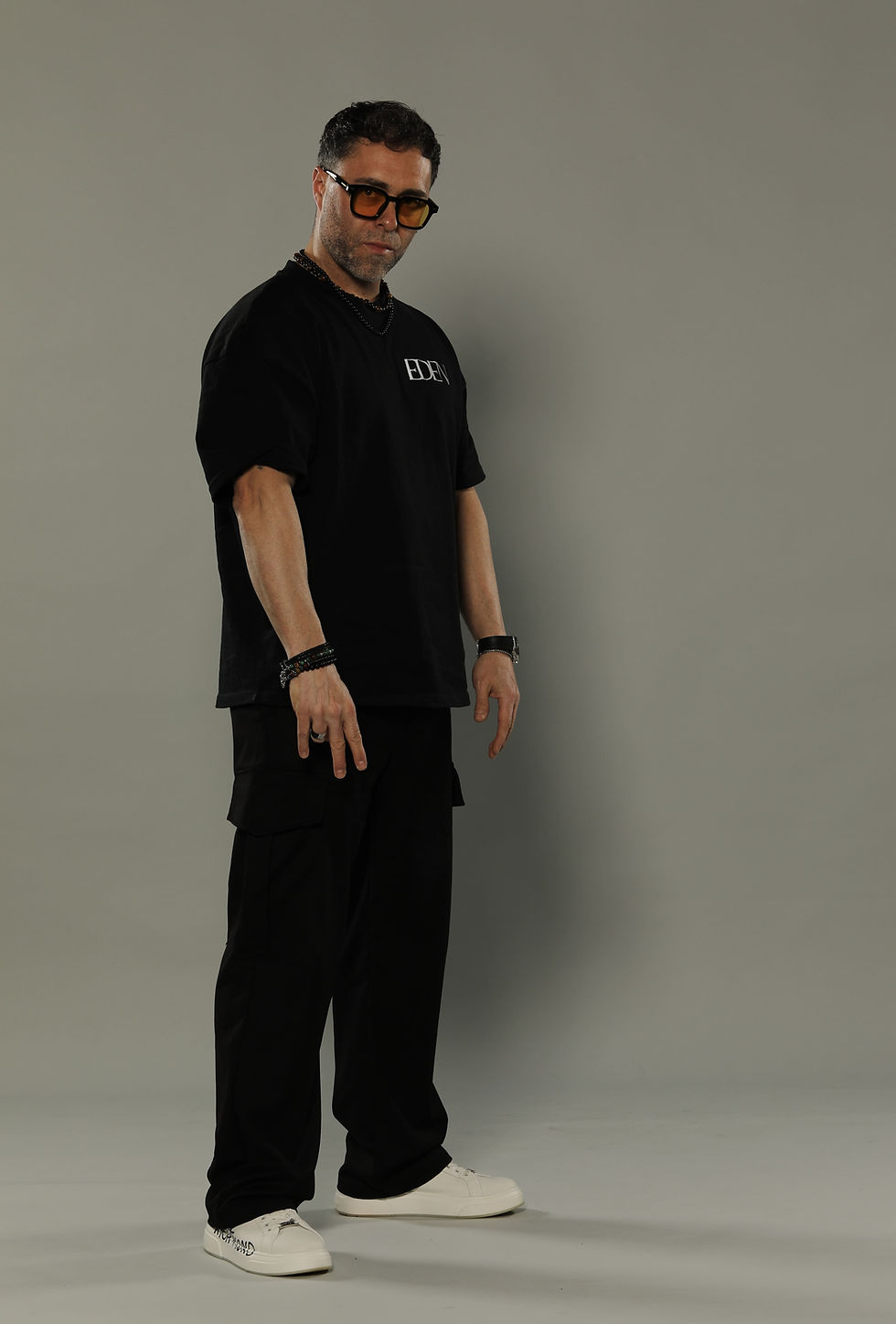
BOSKNEGRA is a Swiss DJ and producer of Madrid origin, whose artistic identity is shaped by a sonic journey connecting Europe, Latin America, and Africa. From an early age, he explored different musical worlds, but it was his first encounter with the dancefloor that revealed the true power of music: energy, connection, and shared experience. Vinyl culture and the discovery of house music and disco deeply influenced his for-mation, laying the foundations of his artistic path. From there, he developed a distinctive sound that blends his cultural roots with African and Latin American influences, resulting in an organic fusion of afro house, afro latino, and ancestral rhythms. His productions and DJ sets are defined by tribal percussion, Latin warmth, and refined electronic ele-gance. Each performance is conceived as an immersive, ritual-like jour-ney, transforming the dancefloor into a space of unity and collective eleva-tion.
You were born in Madrid and are now based in Switzerland, yet your music travels across Europe, Africa, and Latin America. How do these territories concretely influence your creative process?
Being born in Madrid gave me an early sense of cultural hybridity. Spain is already a crossroads between Europe, Africa, and Latin America, and that imprint stayed with me. Switzerland, on the other hand, offered me space, distance, and precision - a place where I could refine my vision and listen more deeply. My creative process is shaped by movement: physical travel, but also imagined journeys. African rhythms taught me the importance of trance and repetition; Latin American music brought sensuality and storytelling, while Europe gave me structure and electronic langua-ge. I don't try to blend these influences consciously; they surface naturally through rhythm, groove, and atmosphere. Each track or set becomes a map of where I've been, culturally and emotionally.

You often describe your first experience on a dancefloor as a revelation. What do you still try to recreate from that moment every time you step behind the decks?
That first experience wasn't just about sound - it was about connection. I remember feeling absorbed into something larger than myself, where time dissolved and everyone moved as one body. That sensation of collective unity is what I still chase today. When I'm behind the decks, I'm not trying to impress; I'm trying to open a space. A space where people can let go, forget their roles, and reconnect with something primal. If the crowd reaches that point where thinking stops and feeling takes over, then I know the mission is fulfil-led.
Vinyl played a crucial role in your early days as a DJ. What is your relationship with analog formats today, and how have they shaped the way you select and produce music?
Vinyl taught me patience and respect for music. Digging through crates, listening ca-refully, understanding the physicality of sound —all of that shaped my musical disci-pline. Even today, those lessons guide me. / still have a deep love for analog formats because they carry imperfections, warmth, and history. They remind me that music is alive.
When I select or produce music, I think in terms of narrative and texture rather than functionality. Vinyl trained my ears to listen beyond the obvious, to feel the groove before analyzing it.
House and disco laid the foundations of your artistic journey. How do these roots interact today with the Afro and Latin American rhythms that define your sound?
House and disco gave me the language of the dancefloor: repetition, groove, and emotional storytelling. Afro and Latin rhythms expanded that language, adding polyrhythm, swing, and a deeper connection to the body.
Today, these elements coexist naturally. The four-to-the-floor pulse often acts as a grounding force, while Afro and Latin rhythms create layers of movement and ten-sion. The result is music that feels familiar but constantly evolving - rooted, yet explo-ratory.
You often describe your sets as a "ritual" or an "initiation journey." What emotional or spiritual state do you aim to awaken in the crowd during your performances?
I aim to awaken presence — a state where people feel deeply connected to themselves, to others, and to the moment. Emotionally, I want the crowd to move through phases: introspection, release, joy, and sometimes even discomfort. Spiritually, it's about trust: trusting the journey, the sound, and the collective energy. When a dancefloor becomes a safe space for expression and transformation, it becomes ritual.

Your music blends tribal percussion, Latin warmth, and modern electronic precision. How do you find balance between ancestral instinct and contemporary production in the studio?
I usually start from instinct - rhythm, percussion, or a simple groove that feels physical. That's the ancestral side. Once that foundation feels solid, 1 bring in preci-sion: sound design, arrangement, and clarity. The balance comes from knowing when to stop refining. Too much perfection can kill the spirit. I constantly ask myself: does this still move the body? Does it still feel human? If the answer is yes, then the balance is right.
Bosknegra represents more than a musical style - it's a vision. What role do you believe electronic music plays today in creating connection, identity, and a sense of community?
Electronic music has the power to transcend language, nationality, and background. In a fragmented world, it offers a space where people can gather around shared frequencies and emotions. For me, Bosknegra is about reclaiming that communal essence — using modern tools to create ancient forms of connection. Electronic music today isn't just entertainment; it's a platform for identity, resistance, healing, and unity. When used con-sciously, it can remind us that we are not separate - we are part of the same rhythm.
Follow Bosknegra